News in Brief: Volume 02
A language spoken again. Lights staying on. Frogs returning. Safaris in sign language. And what scientists learned from burying 2,000 pairs of pants. Eight stories from a world much bigger than the headlines.

Vol. 02
A wider view of the world.
Not everything important makes the headlines.
Across the world, people are solving problems, rebuilding what was lost, opening doors that were once closed and quietly changing the lives around them.
Some stories are enormous. Others happen one person, one village or one pair of underpants at a time.
Here are nine stories worth knowing about.
CHILE
Fifty years of work. One disease eliminated.
Some victories happen so slowly that, when they finally arrive, they barely look like news.
In September, Chile became the first country in South America to be validated by the World Health Organisation for eliminating dog-transmitted rabies as a public health problem.
The last recorded case of a person contracting rabies from a dog in Chile was in 1972. What followed was more than half a century of vaccination, surveillance, public education and ensuring people exposed to the virus could access treatment quickly.
There was no single breakthrough. No dramatic moment.
Just thousands of people, across generations, doing the work consistently enough that a disease which is almost always fatal once symptoms appear stopped killing people.
Sometimes progress looks like invention.
Sometimes it looks like keeping something going for fifty years.
AUSTRALIA
A language is being spoken again.
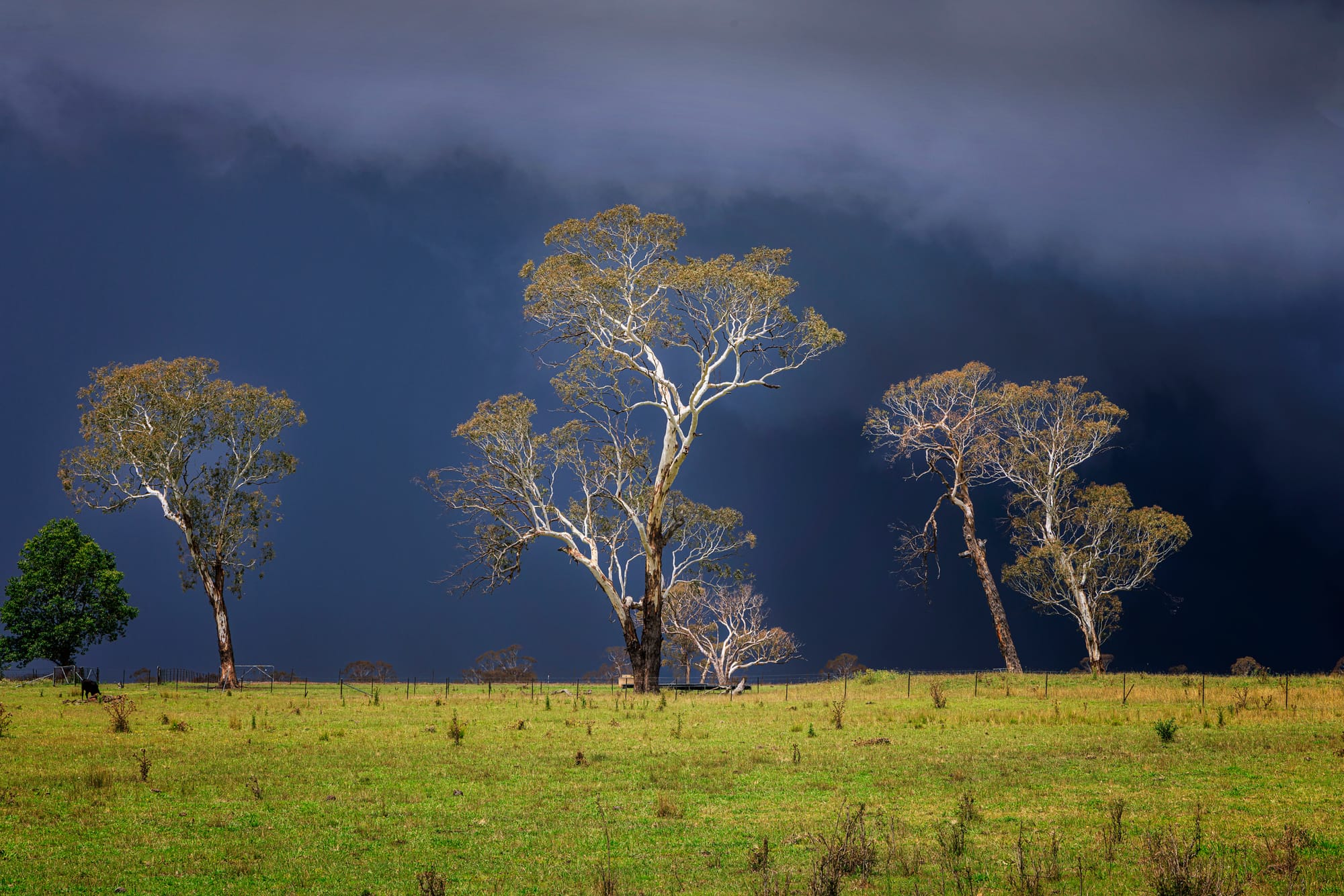
Every Thursday morning in Armidale, New South Wales, people gather to speak Anēwan.
That shouldn’t be remarkable. It is.
Anēwan was spoken for generations by Aboriginal people in the region before colonisation, displacement and forced assimilation pushed the language into dormancy.
By the early 2000s, those trying to reclaim it had extraordinarily little to work with: around ten minutes of audio recorded in 1963 and a scattering of written records.
So they began rebuilding.
Years of work by Anēwan people, linguists, historians and community members have produced new language resources. And now Elders, students, staff and members of the local community are learning and speaking Anēwan together again.
Not preserving it behind glass.
Using it.
A language can carry memory, identity and an entire way of seeing the world.
Sometimes rewriting the future begins by recovering the words of the past.
SOMALIA
When the lights stay on.
When Faiza Abdirahman Ibrahim arrived at a maternity centre in Baidoa to give birth, she spent one night in labour.
This time, the electricity didn’t disappear.
Solar power kept the lights on and the medical equipment working throughout her delivery, something that hadn’t always been possible.
Her experience is part of a much bigger shift. Nearly seven million people across Somalia are now benefiting from improved electricity access and services through energy programmes supporting homes, businesses and public institutions. That includes 205 health facilities and 380 schools.
In hospitals, reliable power means equipment can operate, vaccines can stay refrigerated and emergency care can continue after dark.
It sounds almost mundane: electricity that works when you need it.
Until you’re giving birth in the middle of the night.
UGANDA
A safari told in sign language.
Denis Ssebayiga knows what it feels like to travel through a world that wasn’t designed with you in mind.
So he helped build a different one.
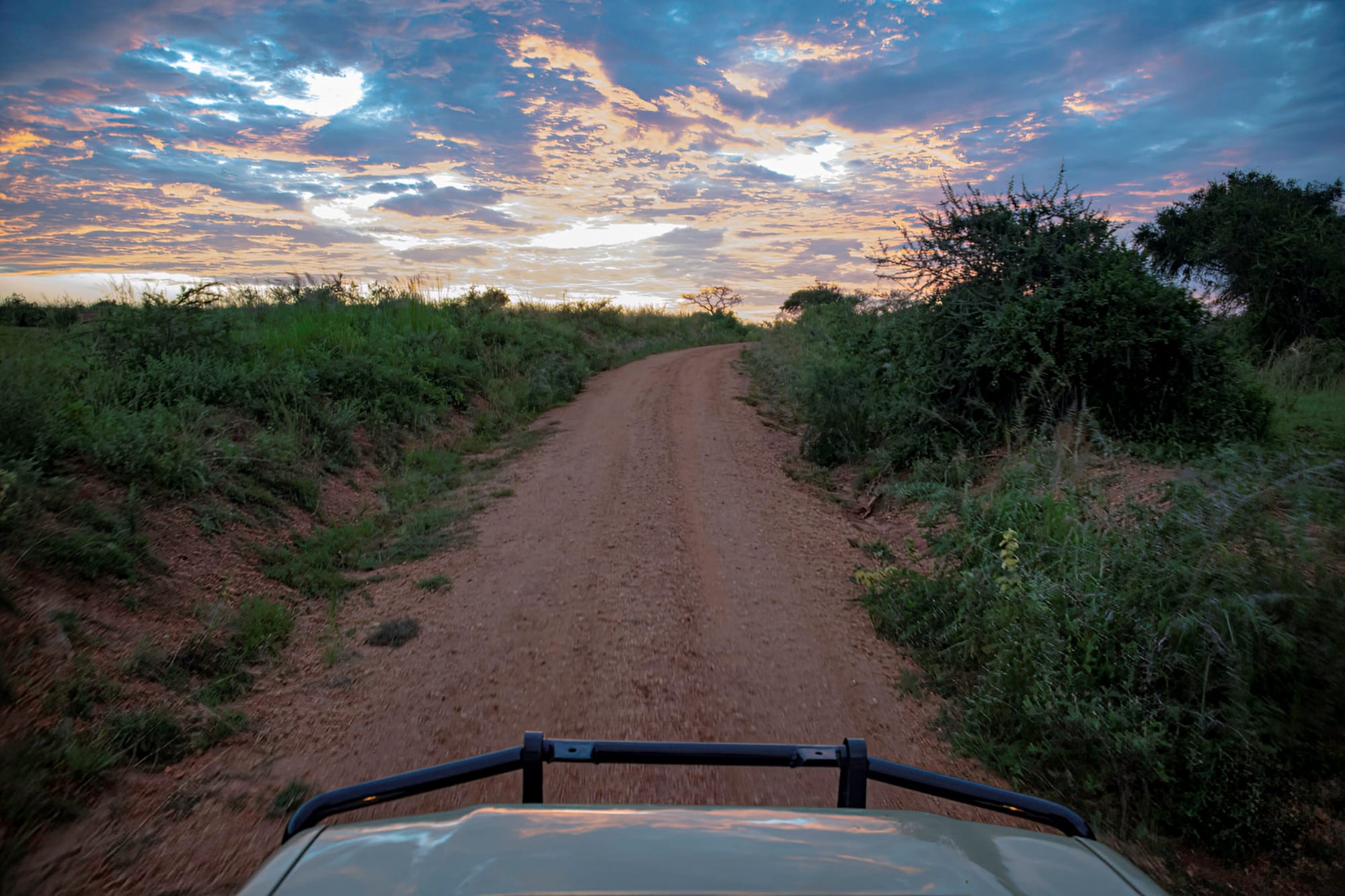
Ssebayiga, a Deaf Ugandan tour guide, co-founded SS Sign Language Tourism with fellow Deaf entrepreneur Simone Pabsch. The company is believed to be East Africa’s first safari operator designed by and for Deaf travellers.
Its Deaf guides lead gorilla treks, wildlife safaris and cultural journeys across Uganda and East Africa, with experiences narrated through Ugandan Sign Language and International Sign.
Sign language isn’t an accessibility extra added onto somebody else’s experience.
It’s the experience.
Hearing travellers can join too, entering, for once, a world built around another way of communicating.
Sometimes inclusion isn’t about helping somebody fit into the world as it exists.
It’s about redesigning the world.
ECUADOR
The frogs came back.
Thirty years ago, parts of Ecuador’s Chocó rainforest were cattle pasture and cacao plantations.
Then people stopped clearing them.
And waited.
Earlier research at the Canandé Reserve found that, after three decades of regeneration, former agricultural land had recovered around 75% of the species found in old-growth forest.
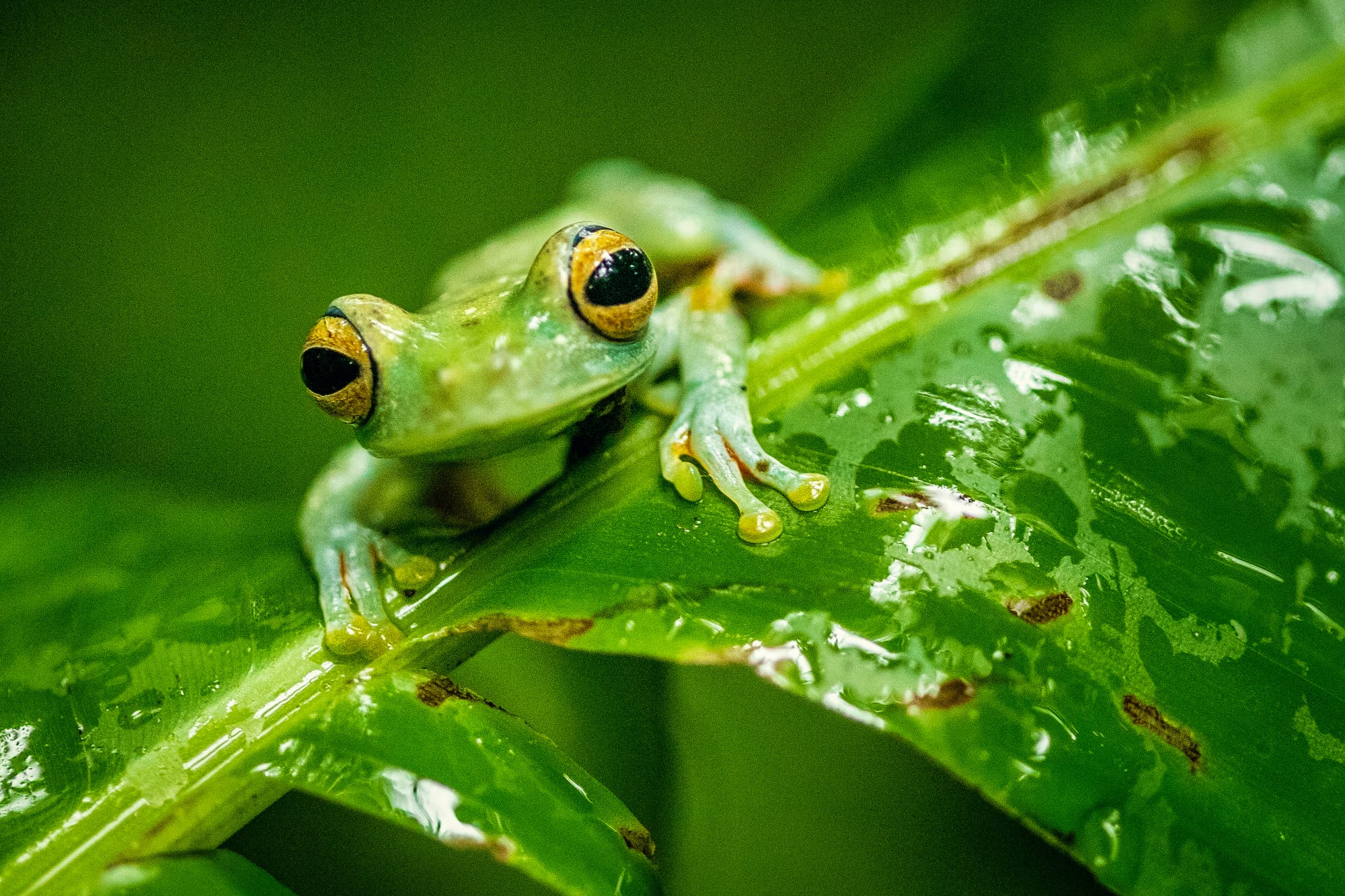
Now scientists have looked at something particularly revealing: frogs.
Amphibians are highly sensitive to environmental change, making their return an important sign of ecological recovery. Researchers recorded 21 species of understory frogs and found that frog communities could make a near-full recovery over the same thirty-year period.
There are plenty of reasons to worry about what humanity has done to the natural world.
Here’s one reason not to give up on it.
Sometimes, when we stop destroying something and give it enough time, life finds its way back.
Even the frogs.
INDIA
260 villages. One door at a time.
Sometimes the help people need already exists.
The problem is reaching it.
Young volunteers working in India’s tribal heartlands were given a deceptively simple task: connect people living in remote communities with government services and support they were already entitled to but often couldn’t access.
So they went looking for them.
Village by village. Door by door.
Across 260 communities and 82 tribal locations, the volunteers reached almost 56,000 people, helping connect thousands with services and information that had previously felt distant or inaccessible.
For the young volunteers themselves, many experiencing this kind of work for the first time, the project changed something too: policy stopped being something written on paper and became something measured by whether it reached someone’s front door.
Sometimes changing a system doesn’t require another policy.
It requires someone willing to walk the last mile.
ACROSS CONTINENTS
Grandmothers helping grandmothers.
Twenty years ago, something extraordinary began with a very ordinary human instinct:
I know something of what you’re carrying. How can I help?
Across sub-Saharan Africa, grandmothers had become central to holding families together through the HIV/AIDS epidemic, often caring for grandchildren after losing their own adult children.
In 2006, the Grandmothers to Grandmothers Campaign began connecting them with grandmothers elsewhere in the world.
Two decades later, that network of solidarity stretches across continents, with grandmother groups raising money and awareness in support of community-led organisations working with women and families affected by HIV and AIDS.
The important word is with.
This isn’t a story about rescuing people an ocean away. It’s about recognising the strength already there and standing alongside it.
Different lives. Different continents. Different circumstances.
Grandmothers understanding grandmothers.
SWITZERLAND
And finally… the scientific importance of burying your pants.
In 2021, Swiss scientists made an unusual request.
Please bury your underwear.
A thousand people obliged.
Across Switzerland, citizen scientists buried more than 2,000 pairs of organic cotton underpants, alongside 12,000 teabags, in gardens, fields, meadows and lawns.
Two months later, they dug them up.
The joke had a serious purpose. Cotton is broken down by organisms living in soil, so how much of the pants disappeared provided researchers with a wonderfully visual indicator of biological activity underground.
The results, published this August, found that land use mattered enormously. Underpants decomposed fastest in private gardens, where biological activity was highest, and slowest in lawns.
Researchers have even proposed an “underwear index” as a simple way of helping people understand soil health.
So there we have it.
Sometimes advancing human knowledge requires a particle accelerator.
Sometimes it requires 2,000 pairs of pants and a shovel.
Science.
WHAT ARE WE MISSING?
The world is bigger than any news feed.
We’re looking for the stories happening where you are. The people quietly changing things, ideas taking root, communities solving problems, progress going unnoticed, or simply something remarkable the rest of us should know about.
Have a story worth sharing?
Help us widen the view.